Showing posts with label high street turn back time. Show all posts

Friday, 3 December 2010

Turn back Time - The High Street: 1960 The slide into Hell

If you've been following the series from the first ep, there has been a certain amount of logic and historic follow through in dealing with individual merchants.  Only Simon had this far been given the odd transmogrification treatment , but now it's wholesale. I must protest in the strongest possible terms the strange changes visited on the Sharps , the Devlins and Gill the dressmaker. I appreciate the possibility the BBC had not the money to have more merchants, but it does not make for very good telly when we see rampant changes that don't reflect the historical change in the slightest bit.

Allow me to explain, I grew up in an ethnic area, there was also a well established English community that never gave up the high street amenities they had grown up with. So by the late 70's early 80's we still had the following. ( and all in the space of about a half mile )

A tailor, one of the best in town, complete with shirts, hats and accessories, for men and boys

A  seamstress, three in fact,
A hardware store
A shoe maker and key cutter
A bakery/pieshop Jewish Deli
A bakery
A butcher
A fishmonger
A general store with credit and delivery 
several large grocers
at least 5 bookshops
A fur coat and repair boutique
Off the rack dressshops
A posh candy  and chocolate shop
A regular candy shop with comics, annuals, games, cards, and all sorts of stationary.
And a Woolworth's complete with restaurant
A barber shop
Several hair salons.
There are several other businesses as well, but I assume you can fill in the rest with your imaginations

The death of the high street shown on the ep is so poorly done you wonder if they really knew what they were doing this time. Quite honestly the wheels seem to have come off the cart here and it affects the results in a bad way. I will however play along and accept the general assumptions and historical trends being shown.

In 1960 the advent of mass production from the 1950's onward and the creation of a leisure class know as teenagers with money, self service  and direct competition created new dynamics for merchants to adjust to. How does this apparently affect the families ?  The Devlins have stopped baking and are operating an American style soda shop, The Sharps are no longer butchers but have a corner store that is smaller but competes with the Sainsbury like Sergison run big box grocery store.  Because until 1964 prices are fixed by suppliers, it's all down to personality and service.  Gill Cockwell  the seamstress, interestingly turns to hair dressing?!?!? Sorry I really can't buy into this, but she does give it a good go.

Let's look at the battle of the grocers, Big Grocer Little Grocer.... The Sharps have delivery, credit and coupon books, we still have some hidden away from when we collected them. The first loyalty programme worked well  and it helped that the service included delivery. They hold off the Sergisons big store with self service that confuses old people and frankly feels cold and impersonal. Along comes 1964 and the law is changed and prices are now up for discounting. The loss leader is with us to stay. Which of course means Carl's plan to slash all prices by 20% is madness if he means to do this for longer than say a month. Very quickly he'd he needs to pay the suppliers and natural pricing levels would have to be expected. As it's telly and only a week , who cares about a little commercial hyperbole.  In the end there is  a bit of decrepitude that crops up with the delivery truck from the 1940s and the Sharps who are not natural General Store keepers, give up and sell the lot off before closing for good.  In real life , many such places fought on and survived by specialising in posh goods and ethnic foods  desired by locals that a large company would not want to carry. Furthermore, the service, were the pressure on pricing wasn't as intense, was assured by bicycle delivery and new trucks that weren't knackered. 

Carl Sergison as of 1964 also ramps up the pressure with continental goodies like pasta, spag sauce and olive oil among other items. His business model soon changes from the personal front of house style to being in the back out of reach of clients. Being a proper deli man in 2010 this doesn't go down well with him , but he does "win" the fight. In one of the few moments where the big grocer looks human, he is truly sad for his friend  when he learns of the closure. One of the best or worse moments in this regard is when the star OAP tells him " this is hell, now we have a dead high street" . You could tell he felt the same. I suspect the demise of the bakery would have been hard to represent as the cheap nasty white bread would have not moved well at all had they allowed the bakery to operate. In fact in a previous history of bread, within 5 years of the rise of the cheap white loaf, the first artisanal bakers sprung up. The Devlins, despite Caroline's limitations as a baker,could still make a loaf that was miles better than any white loaf from a factory and would have given the factory bread a run for it's money. 

And moving on to the Devlins, now stuck in serving a wide range of former teens and later on actual current teens, they do well enough creating a happy space where young people feel at home and safe from adult surroundings. The malt shop , soda shop , milk bar , call it what you like, is a resounding success for a few reasons some I will reserve for later on. Those I can discuss now are fairly easy to understand,. If you give young people a place of their own , a safe place inside that isn't some sort of pool hall funded by charity, they feel empowered and at home. Nowt like a bit of food and something to drink to get the dancing feet going as well. That's the other thing, even today, these teens would prefer to spend a like cash and stay inside than hang out under an bridge or near a dingy bus stop. The Devlins , because of the loss of their business, as well, choose to leave the street, hardly a surprise and a pity as there could have been a real complete circle with them.

Gill Cockwell the seamstress turned hair dresser,   gets an assistant name Naomi, who is   a trained hair dresser, and with her embarks on the adventure of the flip the bouffant and the bee hive. This is where something interesting happened , but was completely missed by the chamber of commerce. Before I go further,  please note that some of the teenage girls, earlier in the ep , despite trackies and trainers, were wearing faux pearls. Gill and Naomi get a quick rise in clientèle , ranging from older ladies who wanted the old do's to the young women from 25  and down who are taking on board the retro hair look.   It's almost as if the camera crew went out of it's way to ignore the young girls coming in, because they had to get the hair done somewhere.  Later in the Milk Bar as the teens are dancing the girls are all better dressed, wearing the retro hair styles and clearly loving it. More to the point , some of them were not exactly new to it.The  retro woman was on display and they missed it! They couldn't see the new girls for the forest. The producers had been looking for nostalgia but missed the very real change in this age group where not all girls are content to look like bags or listen to JLS. Not surprised this was missed by the social historians, they weren't looking for it and they frankly aren't aware of it now. Was talking to someone in London just the other day  who hadn't heard of Imelda May, and she's been all over the place and on the Rob Brydon show.  Interestingly, the person in question is supposed to be a follower and spotter of trends. I think a huge disservice was done to Gill and her dress shop, the 60'were a great time for clothes and especially women  if they could find the right outfits, she could have really prospered, but instead we're told  hats are out and hair is in so  no more dresses. As it is, the hair salon was still a place for the women to be girly in and they had a blast .

In the end, the lesson they wanted to show, was people chose cheap and convenient over loyalty and service . It was priceless to see Michael's girlfriends saying goodbye, even his dad got a few bottles  and hugs as well. This was truly the end of the old High Street as we knew it in this ep. The only problem , is where I lived, it never died . Even now should I decide to. I have a Halal butcher grocer, a tailor, two dress shops that do made to measure and mend, sadly no shoemaker, but he's just up from here in the farmers market or the little mall. We have a perfectly lovely pound shop and proper hardware store 10 minutes away on foot. We have an Italian bakery, cake shop, an Arab bakery , several in fact, and a really nice patisserie with a vast selection of continental cakes and breads.  I don't know how the rest of you lived without this, but I never had to. And no it's not Chelsea or the suburbs, people in my neighbourhood never stopped believing in service, quality and loyalty. We never lost touch with our community spirit, our identities deeply and firmly rooted in our merchants.

Next week the series wraps up with the 1970's , I hope it's better handled than the 60's were.

Watch this ep on the iPayer, or catch up the series here.

For more informatiom  visit the the programme's web page.

Wednesday, 24 November 2010

Turn Back Time- The High Street: WW2 Make do and mend

  Turn Back Time - The High Street: World War 2. More like make do and don't get killed, of all the eps so far, this was by far the best if only because it brought close to home to a lot of people the forgotten lessons of WW2  and the suffering and hardships of people away from the front. My family of course had little or no concept of this as they were in large part occupied by Germans and Russians, then just German, then just Russians ( our liberators, yay! ). Bombs fell a lot and nobody seemed too keen on feeding them or being nice to them. My wife's family was at first in the Jewish Ghettos then in the German death camps ... most did not survive. My own Father, grandfather and grandmother on my father's side spent most of the war in Siberia before the Russians in 1942 decided to let them fight the soviets old allies, the Germans. Before "liberation" they got nothing, they lived on berries, nuts, acorns and whatever they could catch and of course selling off what few possessions of value they were allowed to take when they were deported in 1940. After "liberation" they lived on my father's earning and about a rationed kilo of truly horrid bread for three for a week, local provisions were stripped for the front, so again  they went from nothing to next to nothing. We lost a few along to the way to starvation and the executions in the Katyn forest,  many who started the journey to Teheran and freedom, never made it. So pardon me if I'm not too impressed by the deprivation and home front tribulations of some merchants. That said, some of my family on my mother's side did get out early and lived through the rationing , the blackouts and the bombs. But in fairness, that part of our history never seems to bubble up as much as the total loss of everything we owned, the wholesale murder of our families and the surrealist experience of surviving the concentration camps and Siberia.

Poles who made it to Teheran in 1942 from Siberia
In fact before I say owt else, I suspect most of you have no idea what it means to grow up in a family where the after supper conversation around the table with older relations, regularly came round to family history which included highlights like stories about seeing your own father shot by Russians in the public square, or having your grandfather tossed down a well after he'd been murdered in cold blood by Nazis. Nothing changes your life like being forced to watch non-pulsed with a gun to your head as your Jewish friends and neighbours are taken away and shot, only to be yourself  sent to Ravensbruck shortly after. My father's second wife spent part of her 12th year of life being a courier in the Warsaw uprising as the Russians sat just outside the city waiting  for the Germans to wipe out the remaining non communist leadership.  Certainly puts such things as rationing, mending and vegetable plots in perspective doesn't it. My own life as a boy was an endless stream of what do you mean you're hungry? I  had to march 10 miles in the Polish winter etc...... and you couldn't argue with that could you? When we watched Katyn the film, my father had a running commentary of who was killed , how he and my grandfather were lucky to be arrested later and only allowed to live because they were believed to be spies. My own wife's Grandmother "filled in the details" of Schindlers list that were too gruesome for film.and both our families learned a healthy respect for our bullshit meter and the little bell in our heads telling us it's getting too hot to stay. I appreciate more than most whom and what  I have and why I should cherish it, and that sometimes earthly possessions are sometimes just stuff. I appreciate the horror of what the people of London and Coventry and countless other places on the planet went through, but most of my friends who aren't from a family like ours, just don't get it. They really can't wrap their heads around what it means to have history happen  TO YOU and have history so directly mould who you are. I would never wish any of this on another person, but it does my head in to see just how many people, even well meaning ones, for whom this is just an abstract thing you read about in books.

Tonight's story was as much news to me as it must have been to most people who hadn't bothered watching C4 these last few years. An important retelling in terms that most modern people would understand. So what did change on the home front. For one, suddenly there wasn't a lot around. 55 million tonnes of goods became 18 million tonnes of goods coming into the country. The war effort meant that much of what the country produced went to the troops and out of the country. As the war dragged on and the Phony War or Sitzkreig had only claimed Poland, the real fear and consequences started in earnest only in 1940. With the result that England was nearly invaded, from then on, the hard graft on the home front was very real and very harsh if you didn't cooperate and work together. The British government launches the Make do and mend culture complete with community gardens and the usage of the national loaf and mutton or rabbit to replace the ubiquitous porc. Rationing and ration books become a way of life complete with more frugal use of foods and less appreciated foods like fake banana and spam or corned beef. I myself like both, but in moderation  but would probably not be keen on the fake banana food flavouring. As times get tougher and the men in trade are called to the catering corps, the women and young people are yet again left behind , except for bakers who are still needed at home. Hard fines and jail time are the lot of profiteers and the ill will it causes could be the undoing of much community spirit. As for the ration for the week,  it  consisted of more and varied food than my father ever saw in Siberia in a month or my wife's Bubie ever saw in Bergen Belsen, it was well balanced but meagre. This was not a bad thing, you could supplement it with all the bread you can eat, get veg from the garden and eat rabbit . So if you wanted to, it wasn't the end of the world.

So how will our merchants be affected by this and how will they cope?


The Devlins bakery is transformed into a restaurant designed to serve community meals that satisfy and keep scarce resources better distributed.  Now I wanted to have a go at Caroline, I really did, but she really got herself together this time. Even her National loaf, also  known at the time as Hitler's secret weapon as it was so unpleasant, was not as bad it could have been and she muddled through. Small but important detail about the national loaf , you didn't sell it fresh, it had to be a day old so as to last longer, but that was skipped over, why I don't know. Not withstanding the taste or the consistency, as it was whole wheat, Britain ended the war as one of the healthiest people on earth. Mrs. Devlin, If anything,  displayed the Dunkirk spirit that got Britain through the war the best. Her own children were among the most hard working of the lot and seemed to not complain one bit. More on the Devlins in a bit.

Simon the black smith traded in his toy shop for the basic hardware shop and Gill now offered to mend old clothes and refashion them into new garments. Together they took the initiative to go round the town and collect old tat and transform it back into useful items. I've banged on before,  elsewhere about how the greens of today haven't invented the wheel with recycling. This last gasp of the Ironmonger was to be his best and most satisfying, as his trade would be made redundant with the advent of mass produced goods on a global scale. Gill the dress maker took in many orders for alterations and converted a lot of people to the idea of giving clothes a new life. For the record, during the war Shepton Mallet collected 18tonnes to build a tank. Ever wonder where all those fences fine gates and other bits of less pretty iron work went to? Yep fighting the Gerries. We collected  fat, rotting veg, and all sorts. 

The other real stars of this ep were the Butchers and  the Grocers. Before I get to the Sergisons, let's talk about the Father and son butchers Andrew and Michael. They had to serve mutton, two year old sheep to people who'd got used to  porc and younger lamb. 1,5 pounds per customer, that was it. Now some customers  took on the era and gave it shot as social history, but others turned their noses up at rabbit and thought mutton too nasty. Andrew however turned the tables by making all the things people wanted from mutton and just as good, his best effort was the macon or muccon.. mutton bacon ok!  after a few locals tried it, it turned out to be more than a bit tasty. As things went, the only slightly sour note tat was hit was when the older men went away to serve in the catering brigades, normally hard working Michael turned into bit of a knob. This poor Scottish woman Ann Davidson, comes in to run the shop and not only does she get attitude from Michael but has her abilities questioned by punters, most of whom were women.

And now Carl Sergison and his wife Debbie. What a piece of work these two are. Having hidden some stock from the previous era, they then started to sell it on in private at double profit. in total padding the till by an additional 30£. But in the process setting off a cycle of distrust and recrimination that had it been real wartime would have cost him his business at the very least. They compound this by raiding the community veg garden and using it as their free goods cornucopia of profits.  It's people like this that make you seriously consider going communist. What they were practising was profiteering and illegal. Such people as Carl would have been sent to prison and their shops handed over to people who could do the job properly.The Chamber of Commerce fined them £100 or about £4500 in modern money. Carl seems not to have taken the lesson to heart and is more and more the vile money hungry bad guy of Dickensian novels. Fair shares for everybody just doesn't seem to be in his rule book.What he was treasonous , but he just considered he was taking care of his family even if it meant others went without. During war this is the kind of thinking that gets you locked up and rightly so. Debbie, who gives Geordies  a bad name, then squabbles with Caroline and her husband over using un-eaten bread for the same day, preferring "fresh" baps. As I said , the bread during that era was actually already slightly stale before it was allowed to be sold, and she wanted fresh. NOW who isn't getting the point of the exercise.

Which brings us to the centre piece of the the ep, the communal meals that Caroline organizes with the other merchants to pool resources were a brilliant idea. It went along with the community kitchens that served in some places up to 60,000 meals a day. It was easier to make a massive wodge of food that was tasty and nutritious in one place than in several. Over the ep , several age groups try out the fare, from spam and various kinds of carrot and swede mash... yum by the way, make it myself often , to rabbit stew and sheep's tongue with date and raisin pud  for the people old enough to remember the war. What was nice to see  was that as people got to appreciate the community kitchens more, they stayed long past the meals to chat and give each other support. Even the old art of queueing for something other than concert tickets, got people talking to each other in a way they hadn't in donkeys years.

Just as the Sergisons are truly not getting the point of the exercise, there is an air raid drill that reveals a lot more than just nerves and brings a few back to a realization of just how dangerous things are in the second war and that maybe they ought to after all cooperate. I'm not entirely sure Carl got it, but had he been there when one of 200 bombs fell on the town in the war, he might have been a bit less eager to be such a banker. My father's own recollections of air raids was the hit and miss nature of the beast, leaving one building intact but another completely shattered. Perhaps if they had taken out a building with a few fake casualties, it might have got the point across to some people a bit more forcefully. It does bring Caroline and Debbie closer and the women bond again. One gets the sense it's the closest Debbie was going to come to an apology.

As moral grew a bit strained and low, the street gets a dance to pick up spirits and we see some lovely frocks and the leg painting ( the full fashion look)  that imitated the look of real stockings with the sexy black seam on the back of the legs. Now the party was tamed to certain degree. During the war, such parties were not as innocent as this one seemed, with no lonely women going off with soldiers for a quick romance against the tree or wall, but then no one said it was going to be 100% accurate. In the end, the war pigs went home ( got some Ozzie on at the minute) and all breathed a  huge sigh of relief. All over the country and in Shepton Mallet a VE or Victory in Europe party was held in the street and became part of the biggest street party in history one reckons. Folk brought their left over rations and a feast was made to satisfy all apatites present. 

What is clear to have come from this in the population of the town that took part, was the creation of a community spirit that will not be soon broken. That town centre seems more likely than ever to retain a bit of the fairy dust when the cameras will go away. The best reaction was not from the old age pensioners who loved the meal of sheep's tongue and rabbit, or even the adults who embraced macon as delicious and gorgeous, but from a little boy who seems to have understood just how much rationing meant and that he was happy he lived in a time that had come about from the self sacrifice of millions of people like himself so long ago.  This lad who seems to have become a real fan from as early as the Victorian era has truly embraced the social experiment. So it's not Doctor Who's TARDIS, but he's been through 80 years of  the town's history in a way a pamphlet never would have. The closing line of the ep definitely belongs to the man who summed up the feeling stirred up by the week...We're all in this together, Let's not be greedy, Let's all help each other. Surely a motto worthy of any time?

Catch up the series here And find out more from the official web page here 

Wednesday, 17 November 2010

Turn Back Time-The High Street: The late 1930's

Turn Back Time- The High Street 1930's in an episode filled with Jeeves and Wooster mood music, took us into the  later part of the great depression when the sting in the tail wasn't so painful and some hope was returning. It's watching this series that shows you just how boom bust we are as a civilization. Not just economic hard times then prosperity, but war and peace in an almost predictable 15 year cycle. And this ep was all about the short lived happiness just before WW2 broke out. For the first time children became the focus of mass marketing as our parents and grand parents got an allowance and weren't forced to work down t mill any more. The other big change was the improvement of working peoples lives with fixed business hours of 9 to 5 and Sunday's off, for Church. Add to that the state imposed hols, and people were given a massive amount of leisure time for the first time ever.

The changes aren't limited to opening times and hols either.  Merchants are now for the first time in human history offered a vast array of manufactured and pre-packaged goods, speciality items focused on specific demographics and age groups as well as leisure based goods aimed at filling the time available to adults and children. It's not all sweetness and light for every merchant, Butchers and bakers still have to "make" bread and cuts of meat, and the seamstress is still being commissioned for off the rack garments. But for those who choose to embrace the new manufactured goods world, the extra time is now focused on the simple but soul consuming idea of SELL SELL SELL. Advertising becomes king and as we will see, it can get pretty rough and cut-throat. At it's worst, merchants would undercut competitors, blatantly practice product placement and  buying incentives that went right past ruthless, straight to anything to get people to buy your stuff with the help of national advertising campaigns. Ovaltine had a secret decoder ring they flogged on the radio show they sponsored. Can you guess what the message was when you got your decoder ring???? Drink Ovaltine. Eventually the worst of the excesses were curbed by state intervention and the modern world of mass marketing and creation of need as we know it was born.

The other effect of the era on our merchants was also having a deep impact on our High Street families. The hordes of small people with money to spend meant the birth of the greatest era ever for candy shops and toy shops. These creatures had sweet tooths and vivid imaginations that didn't take a whole lot of prodding to buy sweets and the latest board game or toy. And while the children roamed the streets pester power unleashing by looking at eye level displays packed with temptation, the parents had a cornucopia of branded goods and pre made clothes to choose from. Our merchants would have to be up to the challenge. However our C of C does make sure we know that women stopped baking their own cookies and cakes, which now became the new source of income for bakers. Nearly forgot, Electricity and refrigeration arrive, giving we would think a leg up to the butcher and the baker.

So how did our merchants cope with all this?

Starting with the grocers, the sight of HP sauce, OXO, Hovis and Lyons as well as stacks of choccies and candies along with the fresh produce and fruit, signalled the beginning of the salad days on the High Street for the Sergisons. Mr. who hates children  smiled the entire time as he took large amount of money from children and his wife engaged in a less than fair trade policy with the butcher. I found her attitude unsavoury and predatory, bordering on  callous. Having found a wall that was the butcher's to hang a sign , she claims it for free rental while never once honouring the reciprocity agreement of putting the butcher's flyers in the shop. She then takes the next step of causing the butcher's shop hardship by claiming discounts that never existed. I'm surprised young Michael didn't take the sign down much earlier and drag them into court for damage to trade. Besides the predatory Mrs. Sergison, who seems to find new lows to delight in, with the approval of her husband, the shop itself, pretty much runs itself as one would have expected.

And so on to the Butchers... Father Andrew and young Michael who seems to have abandoned any idea of a boring career as merchant banker, feel right at home with was essentially a modern well equipped butcher shop the type I still remember frequenting not 15 years ago. You know before the big stores killed them off. Armed with cooking tips, and useful cuts of meat, they double their take from last week and find that selling 30's cuts is actually more attractive than the cellophane wrapped pre-cuts Michael thought was going to be the salvation of the place. Seems people really do appreciate personalized service that gives them absolutely the freshest meat they can  get. It being 2010,  the cellophane that might have been a revelation in 1937, didn't go down well with modern shoppers who were demanding the brown butcher's paper and the fresher cuts of meat. Who knew we missed the flank, blade, brisket, and  round of beef? Well me for one, I still get those from local halal butcher up the street. Service with a smile and I know what I'm getting. Lamb , beef and chicken, and if I want, the farmer's market has a game butcher as well. I have admit I'm probably not like most people and abhor the big box grocery stores and I don't cook ready made meals. As my lot become more important, the butcher will become more popular again as well. Michael in his flowering as a salesman, has growing appreciation for his father's chosen profession. But what really impressed me was the sense of fairness and hard graft the lad has in all his dealings, be it with clients or other merchants. Something I suspect the Sergisons will abuse at their own peril.

Which brings us to the baking Devlins.... Before I rip into Caroline the "Gourmet Baker", let me get this out out of the way first. What they experience, is what every ethnic family I have ever known that owned a business, ever went through. If you are the child of a restaurant owner, baker or delicatessen, you have no life. After school and homework, you help in the family business, as it will be partially yours one day, you have no holy days off regardless of faith as your mates might know them, vacations are a luxury and you do not get to play with your friends from school like a regular child. But don't feel too sorry for people like these, they become the hardest grafting people with the some of the best work ethic and community spirit you will ever know. If they promise you something, they will never let you down knowingly.

Jason teaches the "Gourmet Baker" how to bake cakes
Notwithstanding the slight problem with the electric oven, Caroline has the biggest problem any of the people on this programme. She's a baker like I'm the Emperor of China. Let me be clear here, baking cakes is easier than bread, there is no yeast involved  and the remaining chemistry so dead easy a 12 year old with a bit of training can do it. But not our Caroline...Gourmet Baker... Artisanal Master Baker, pull the other one, it's got bells on. In my life I have known true master bakers who are capable of  a wide variety of breads, cakes, cookies and pies. My own grandmother who considered her skills ordinary, could have baked circles around this woman. My own wife switches from egg bread and baguettes to elaborate chocolate cakes then back to a basic rye bread.  Caroline is so utterly useless as a baker that she needs Jason Hornbuckle, genuine baker, to show her how it's done. Even after her master class where she decides it's easy, she's still only doing basic sponge cakes and dead easy cookies. No surprise then that she hates all that hard work for little reward. Sooner the white bread vans arrive to put her and her family out of their misery , the better.

Gill, the seamstress, faced with a shop full of ready made off the rack dresses, prefers selling commissions and tries only hard enough to sell them till she can upsell the client onto a bespoke dress. Had she had to off load the stock or loose business, I'm sure she would have been a tad keener to shift them. As it is she does do a about £300 of trade in the week, which is not bad for the effort involved. Even the Chamber of Commerce lady is of the opinion Gill was right to sell her services over the off the rack frocks. The results were spectacularly transforming an ill dressed blonde woman into a stunning example of 1930's or 2010 chic. If you have enough customers, there is no reason you need to stop making special orders.

Simon Grant Jones, skilled artisan with no demand for his services, was further reduced to less than useful when he was made to run the new toyshop.  Not a natural salesman, Simon found it hard to close sales and was more interested in giving away his stock or playing with it. Quick note about the toy shop. Do not think the toy shop is an invention of the 1930's. Prior to that time only people of means and children from aristocratic families had toys, these toys needed to be made and sold, so there were toy shops, but now the great revolution of child labour being made a thing of the past, plus a well off middle class, meant the toy shops had a lot larger client base. Simon Did however pull himself up and saved his week later on during Empire day celebrations where the toys flew off the shelves into the hands of parents and eager children drawn by the meccano and electric trains on display. At the end of the day Simon is still no more closer to being a proper merchant and is likely to never move beyond trying  to prove smithing is a valid business without a sales force behind him. Much to his joy and the surprise of some sceptical mums, the children not only loved the toys and games, but seemed more alive than usual.

The crowning touch of the ep was to have a now lost children's day off that used to reach round the world, Empire day was a community event complete with fancy dress, races, street food and entertainments that celebrated the Empire that had made their prosperity possible.Shepton Mallet's Empire day was a huge success and was part of great week during which people reinforced the new habits of fresh meat, quality polite service and using their High Street. The merchants learned the mass produced goods mean more free time and The one family that seems most to have grown in experience are the butchers. Dad proud of his occupation, son clearly grown into a confident young man who can sell any cut of meat and is proud of what he's doing. Next week will prove harder as they enter WW2, but I'm sure it will as interesting as all the other eras.

Best line of the ep.... "Some of the regulars have been coming since the Victorian era". So there we have it, proof that Shepton Mallet is in fact on Gallifrey not Earth.

Look out for the High Street road show  check for a location closest near you or catch up the series on the iPlayer.

Wednesday, 10 November 2010

Turn Back Time-The High Street: The Edwardian era

In the Edwardian era shopping became all about etiquette, customer service and a trip to the shops became a leisure activity for the first time. What had been an unregulated risk filled trip to feed and clothe your family was now a world where greater choice existed and the punter was king. This is not to say you still didn't get some products that claimed to be all things to all people. But if viewed with a critical eye, you could rightly conclude that the current model of high end shopping is in fact based on the ultimate era in shopping where service and  high quality were still a consideration. One would think the merchants of Shepton Mallet would be eager to sink their teeth in this era.

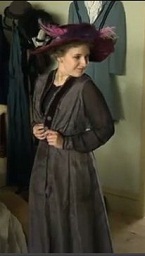
Turn back time- The high street is joined this week by a new shop that reflects the growing importance of women in retail. Gill Cockwell, who operates her own dress making shop in Bristol will run the dress maker's shop. While the social historian makes a big deal about dress shops being owned and operated by women in the 1910's , they are indeed a fixture far earlier. What is fascinating about the Shepton Mallet shop through the week, is the fact that we see for the first time in the main stream, the fact that modern women below the age of 30 are flocking like bees to honey to places like this. They represent what the feminists call the third wave, and they themselves just call retro women. For more on these fascinating creatures, I strongly suggest you read Retro Woman Revolution.


The rest of the shops are kitted out in the best of Edwardian finery and product. Our grocer goes upmarket , carrying for the first time most to f the products and brand names we take for granted today. The Butcher still uses the same refrigeration but is now also flogging game like rabbit, ducks, and pheasant. Our Iron monger is now a penny bazaar mostly stocking factory made goods of a mass production quality. Lastly, the bakers have attached now a very fashionable tea room.  While most of our merchants should do well, the challenge of  switching over from hand made products to to essentially a load of pound shop tat could prove harder.

Armed with 2 new employees to help insure the highest level of customer service, the week starts out hopefully with everybody learning their madams ,sirs , master, miss and mistress. In the Polish language spoken by non yobbish persons, these appellations exist to this day. The other element that works it's way through  the ep is the growing frustration of the women from last week, bubbling into the use of suffragette symbols and clothes. I think two of the women found it hardest to adapt, not having set aside modern attitudes for the time of the experiment. Had they done so they might have discovered what my grandmother knew. They had a lot of power that wasn't always obvious to the modern  feminist revisionism of the era. Women were the transmitters of language, culture, values and a great deal of useful skills.

And speaking of skills, our modern master baker, has no clue about operating old fashioned ovens, is mystified by cakes and totally rooted in her own recipes and so has not allowed for the possibility that lard is as tasty or easy to use as butter. Rather than learn from books or asking one of the Chamber of Commerce, she cheats and buys butter and thinks she can make working class pudding when she's supposed to be making high tea. What should have been a walk in the park commercially speaking, became a disaster. For the record, my own Babcia(gran) and mother baked with lard. Cakes and pies came out tasty f lackey and lovely. She even feared potato bread as we see later on, a bread we had just a few days ago, home baked of course. Caroline the baker showed the effect of 60 years of systematic erosion in the womanly arts our grandmothers took for granted. This same problem crops up in a generational way as you see the younger the person , the less they are open to game as good food and the complete disappearance of the skills needed to prepare and cook the animals. One of the best or worse lines came from a mam who was with her young daughter on the verge of tears or nausea, I'm not sure which,  said pointing to a rabbit, "Could you prepare that so it looks like  meat " then turning to her daughter " It's ok you can just have some vegetables". Just where do these oiks think meat comes from???  Spineless disconnected modern parents too afraid to let the children know that most of what ehy eatr used to be alive. 

Meanwhile near the butcher's shop, Michael the oldest son grows bored and sets off to sell rabbits and pheasant to the locals. Very enterprising for a lad who started this wanting to have nothing to do with the family business, while his father had in his eyes the light you see only when people are truly happy and fulfilled.   At one point the groom  comes in to see the preparation of the boar's head for the wedding breakfast. As it turns out, you don't eat the entire head, the skin is used to cover a variety of rich meats to be eaten once the centre piece is done being a decoration. Interestingly the young bride doesn't seem all that fussed about having a boar's head on the table, much to the relief of her future husband, though we learn she is a picky a eater. Perhaps she isn't as closed to food as she used to be.

Gill running the dressmaker's, has a blast selling corsets to young women and making the wedding dress for our bride. She also reminds us of the lost art of embroidery that most women used to do and that the whole family appreciated. Embroidery represents an art that allowed people to state their political feelings, tell the family history, and insure people knew which thing was theirs. Such elegance and refinement is about to die in Europe, with only one place remaining in England making lace and proper linen going the way of the dodo bird. I think Greg Wallace is wrong, hand made clothes can and should make a comeback. Especially in view of the fact the big manufacturing outfits in China are folding in the big bubble that is bursting as we speak.

Our iron monger now faces the real prospect of no one wanting his services any more. Seeing  the need to prove he's still relevant, he heads to the forge using the baker's youngest son as hired help to run the penny bazaar while he crafts a mirror. This barter of labour for goods  seems to have been a perfectly normal arrangement as children as young as 12 might be made to work in shops, this being the limit because of the law that insured you went to school from 7 to 12 . On the other scale of profit is the Grocer and his family, that prosper through the early parts of the week, never skipping a beat. Seems the residents of Shepton Mallet have come round to the idea of service with a smile and being made to feel like valued customers.


Had the Great War not come along to shatter this idyllic world, it's clear they would have sorted themselves out in the end I think. But in the 40th minute, call up papers come for all the men over 15, 60,000 shop workers have left work by 1915, 120,000 boy soldiers died . With the men and boys gone, the women step up and take control of the shops and young Michael runs his father's shop. It's not the only hardship, England imports 60 % of it's food and 80%  of it's wheat. This means empty shelves, high prices, potato bread and women missing their men badly. Even the suffragette banners get put aside as the ladies get stuck in and hope their men come back.  In 1918 140 of Shepton's men did not return, we aren't told of those maimed, but the notion that women were incapable of running a business was taken less seriously and married women over 30 got the vote. We know it's just a day but the lesson was not lost on the men or the women. War was hard on all of them and at the end of the day, they needed each other, family IS important after all.

What did the war do to Britain's people? Sainsbury's  trained thousands of women to be grocers, men could not ignore the achievements of those who stayed behind. What did the week do for our families? Some learned they may consider a new path in life, and yet others realised they were seeing their partners in a new light and yet others continue to struggle away from the era that made life comfortable and the skills they now needed, apparently redundant.  But the lesson of the week was mostly that we miss the idea of being treated as a valued customer, the modern person is in fact the old fashioned person who knows how to do many things. Versatility in one's skill set is the secret to not falling into the technological trap most of us have succumbed to.

Next week, the!930's! You can also visit the High Street Home page. 

Thursday, 4 November 2010

Turn Back Time- The High Street: Retail was never tougher than this & Spooks

Now we know what Greg Wallace was doing that one time he skived off Masterchef. He was attending Market day in Shepton Mallet. BBC's long anticipated, at least by me, Turn Back Time- The High Street, kicked off with the Victorian era. Greg Wallace greengrocer and foody, Juliet Gardiner social historian and Tom Herbert baker and food historian with High Street experience, form the "Chamber of Commerce" charged with guiding the participating families through the various eras that will take us all the way through to the era I was born in, the swingeing 60's. I love the concept of this programme, it does for retail what Victorian Farm did for agriculture.

In this series we follow a grocer  a baker, a butcher, and a candlestick maker ( ironmonger ), who must try to attract modern shoppers back to the town market square with old fashioned goods and services. As we'll see, some things never go out of style and others are a bit of a stretch for the modern sensitive Briton. With a combination of advertising, guile and  judicious use of ingredients, these families must try to make a profit by the end of the week. At the end of each week they have a Market Day when they have a last chance to sell off any perishable goods that hadn't moved during the week. Will the people of Shepton Mallet warm to the return of the weekly market or will they continue going out of the way to a big box store? The results will surprise you.

Whatever conceptions you may have had about Victorian retail, romantic or otherwise, they are shattered into a million pieces. While Larkrise to Candleford paints a pretty picture of happy merchants being nice to punters, never dreaming of thinning out quality material for a bit of profit, High Street pulls back the veil to reveal the truth of early High street commerce.  There is a reason we have standards and practices and quality control regulated by government, the imperative to make a profit and avoid the workhouse was enough for many merchants to skip on hygiene, proper ingredients, add poisons or useless fillers like sawdust, plaster of paris,  clay or poisonous alum and be economical with the truth. Oh wasn't it grand when the government stayed out of our business?  Well actually no. People died, got ill, workers lived even rougher than the poor merchants did and clients were generally ripped off.

What was interesting to note in episode one was the modern families taking up the trades, were already modern day practitioners. What they took for granted as normal and they considered as standard for the industry was turned on it's head. Seems that years of state intervention, sociological change in the family unit as well as commercial law, has moved commerce from furtive struggle to get as much for as little possible off un demanding clients to the current high standards and inspections that insure that even the tattiest shop today is still safer for even least careful shopper.

 What hasn't changed is the hard graft required to get raw materials turned into product in the shop window. To the last man woman and child involved, they were early to rise and late to bed. Merchants often shared a single large room over the shop. Working conditions were tougher than now, at least in part down to the fact they had to do everything by hand, had no labour saving devices and water had to be taken from the one pump in the town square. Refrigeration was a nightmare for the butcher if the twice weekly ice delivery wasn't on time, but did serve to inspire butchers to come up with novel quick ways to sell off stock. These included Pease pudding, sausages and pork pies. For the Baker it meant creating demand for product that wasn't always of the best quality or was on the point of becoming too hard to eat. Had they had enough time, I'm sure our bakers would have discovered bread crumbs. Our Ironmonger realized quickly he'd need an apprentice if he was to keep up with orders and sell goods from the shop, and the grocer fell back on home delivery, to insure people got in and out of the shop quickly and still felt they had been served.

So what sacrifices were made this Victorian week. The funniest had to be the Baking family, when the mum who is the master baker in 2010 had to stand back and let her husband take over duties. She found it hard to hold back and he found it hard to take advice. His first batch of 25 horribly burned, salty,  and under baked loaves was a complete disaster that cost them money and taught them the need to understand the materials at hand. With help they learned to add filler to the bread, which in this case was rice, not a bad thing, but could have been much worse. Alum, sawdust and far worse was put into bread to manage expensive flour. Baker Steven Oxford showed how authentic Victorian bread was made and uttered the phrase" Have you ever licked wallpaper before?" to describe the experience of eating it. Dry heavy and nasty, it's no wonder Victorian Farm Ruth Goodman was keen to make her own bread, which of course is what farm wives did in fact do. Later on they moved into 1870 and new lighter easier to use flour, producing a tastier and easier to make bread.

Our grocer and his family was struck by the lack of goods we assume should be a staple of any such shop, mayonnaise, fresh fruit and crisps. The rest all had to be made, wrapped and delivered to customers by cart. Eggs, butter, cheese, jams and veg were seasonal and had none off the preservatives that lurk in our food now. Perhaps the greatest adjustment was for the butcher, who had to re introduce the art of entertaining punters while making sausages and cutting meat. There's a reason why good food retailers until recently were such great showmen. You needed to to do everything you could to get customers to YOUR shop. The best stunt was the giant cheese, a massive round of cheddar brought in special for market day. It was the star of the show and was advertised with sandwich board and loudspeaker! the worst thing to happen wasn't the burned bread, but the burned pork pies left alone in the baker's oven while ALL the men were down the pub. On reflection, you had to see this coming, but I suspect no self respecting butcher would have left his pies untended like that back in the day.

The biggest challenge in this programme easily had to got to the ironmonger. He had the doubly hard job of selling what he himself called  "a pile of useless old tat". Today we would call him the hardware store and buy a variety of goods like lamps, tools and fencing material. Just how was he going to make any money at all? Turns out it was one of the most profitable enterprises in the experiment. He first spend a great deal of time catering to the needs of the High Street merchants then on market day , he sold an incredible amount of candles and candle holders. As for the useless old tat, lots of it went as well.

Quality over reputation was the balance and choice that had to be made by our families, see for yourself how well they did, but all in all I would say they came out well and the people of Shepton Mallet came to appreciate the experience. The biggest joy among shoppers over the age of 10 seemed to be the discovery that they enjoyed market day, not least because they could talk to friends and take it easy an experience you can still have in any ethnic neighbourhood you visit. It's the modern rushed suburban consumer of today that has forgotten the joy of what it meant to shop on a high street. What really struck me was the finickiness of the  ill informed people who turned their noses up at bread with lard in, or were put off by the sight of cured meats hanging outside the shop. One little girl made a remark about how that was why she wanted to be a vegetarian. Well honey, even veg was dirty once, and just what DID YOU think goes into your food? The direct connection between source and finished product was on display in the High Street for all to see. I grew up in this and to this day do not feel offended by the sight of lung or pig's trotters, nor do I find it an alien concept to include animal fat in my baked goods.  Modern folk are cut off from their food and  have sanitized their lives and eating habits to such an extent that the Briton of 1870 would not recognize them as English. For more information on the programme, click here.

Spooks fans, it's down to one last ep before the current series ends. Sad news ladies, seems Lucas North is not who seems to be, in fact he's not even Lucas North. Will he redeem himself? will he save the world yet again? Will he die in the attempt to pay for his sins?  Yes , yes and most probably! Harry Pierce and his agents are lured into a chase for the real killers who planted a bomb in the British embassy 15 years ago. Vaughan tries to sell Harry Pierce the information with Lucas in full view. What secrets is Lucas North hiding, what is the awful truth he so wants to avoid getting out? If you watched, you know, If you didn't,I'm not telling you, but it was cracking good fun. The quality of the writing this series has been head and shoulders above last year's and I liked that series as well, despite it's low ratings. What has happened this year is simply that the characters are that much more compelling and from the first ep, it was obvious Lucas was going to be in trouble.

What a rotter you say, a scoundrel and a bounder and a cad. But I suspect we'll be seeing the sort of end you give to tragic heroes in stories of old. That great speech in which he comes clean, the moment he betrays the bad guys and put's pay to the Chinese plot to do something nasty capped by his ultimate sacrifice in a heroic bid to save his mates, or even his cold killing at the end by a vengeful Vaughan, a ticked off spy, or an inconsolable Maya. Any way it goes, it's sure to be a heartbreaking bit of telly.

Ruth's story is also picking up pace and leading to something dreadful, I doubt she'll be killed, but clearly there is going to be a heavy price paid for her current emotional tumult. We know she will be deeply involved next week in the denouement  of the Lucas story line, just how it will play out will determine how many funerals we'll be watching in the last 5 minutes and just what cliff hanger they leave us on

Dear readers, I accidentally switched over to ITV2 during "The only way is Essex". After about 5 minutes I turned it off fearing for my sanity should I watch it any longer. These people vote? They are allowed to carry on reproducing and living among us?  Lord help us if any of these glakes gets near a position of responsibility, but no how could a bunch of vacuous, spray tanned, Visigoths get anywhere near power?  Shhh don't tell me I know, the PM is one of them isn't he?